Demand shifts: how weaker Chinese buying and rising Russian demand are reshaping Phuket
What happened
In the first quarter of 2026, the foreign buyer mix in Thailand’s condominium market changed noticeably. overall foreign transactions declined, Chinese demand softened, and Russian buyers moved up into one of the leading positions. For Phuket, this matters more than a simple nationality shift in the statistics: the island depends not only on tourism, but also on which buyers are willing to hold property long term, use it seasonally, and support rental demand.
Why this matters for Phuket
Phuket has always been sensitive to changes in external demand. When one major buyer group slows and another strengthens, the market reacts not only in prices but also in product design. Everything changes: which projects sell faster, which locations hold value, which formats are easier to resell, and which apartments are easier to rent out.
At the moment, the clearest shift is toward buyers who are willing to pay for quality, privacy, and practical long-stay living. That continues to support premium condominiums and villas in areas with clear infrastructure, good access to beaches, schools, healthcare, and everyday services.
What it means for buyers
If you are choosing a home for yourself or as an investment, the nationality mix around you matters less than the resilience of demand in your segment. The key question is who your future buyer or tenant will be in three to five years.
- Check liquidity, not just marketing appeal. A unit in a nice project, but without a clear target audience, may take longer to resell.
- Study the layout and size. For many foreign buyers in Phuket, well-designed mid-size apartments are now working better than very small studios.
- Assess the neighborhood as a place to live. Beach access matters, but so do shops, restaurants, schools, clinics, roads, and an international community.
- Do not rely on one single resale market. The wider the pool of potential buyers, the more stable the investment.
What it means for sellers and developers
For owners and developers, this is a reminder that foreign demand in Thailand does not disappear; it shifts between countries, formats, and budgets. If marketing once relied heavily on one major source of buyers, today a more flexible strategy is needed.
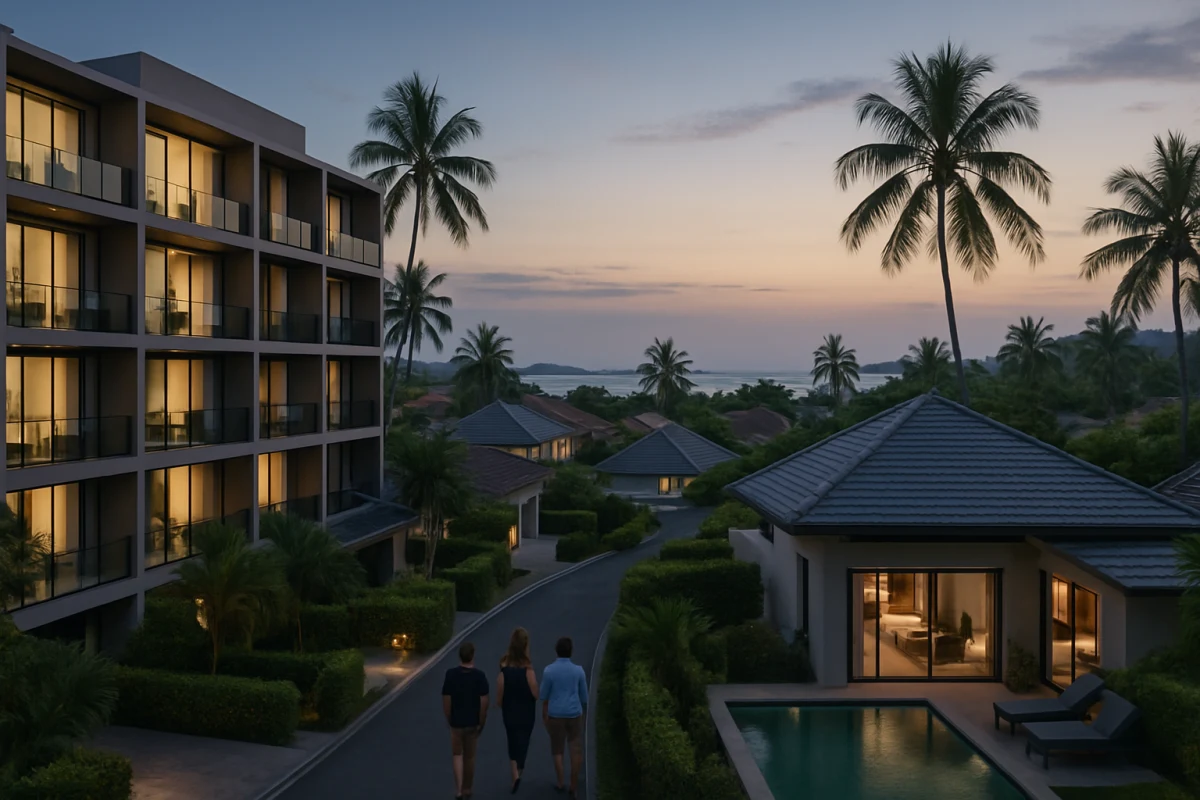
In Phuket, this is especially visible in projects aimed at long-stay living: family units, seaside residences, serviced developments with clear management, and homes in areas with strong seasonal occupancy. These assets tend to hold value better because the buyer sees not only a resort setting, but also practical everyday use.
What to watch in the coming months
The short-term conclusion is straightforward: the market is becoming less mass-oriented and more segmented. That is not necessarily negative. For quality assets, it can be positive, because demand concentrates where there is real value rather than just promotional noise.
For investors, however, it means stricter selection. Three things matter more than ever: legal clarity of the ownership structure, strength of the location, and a realistic exit strategy. If even one of those is weak, relying on broad market growth alone is risky.
Practical takeaway
For Phuket, the latest foreign-buyer data is not a reason for alarm, but a reason for discipline. The market remains attractive, but the winners will be the properties that suit a specific lifestyle buyer, not just an abstract foreign investor. Those are the apartments and villas most likely to rent well, resell more easily, and retain value if external demand changes again.