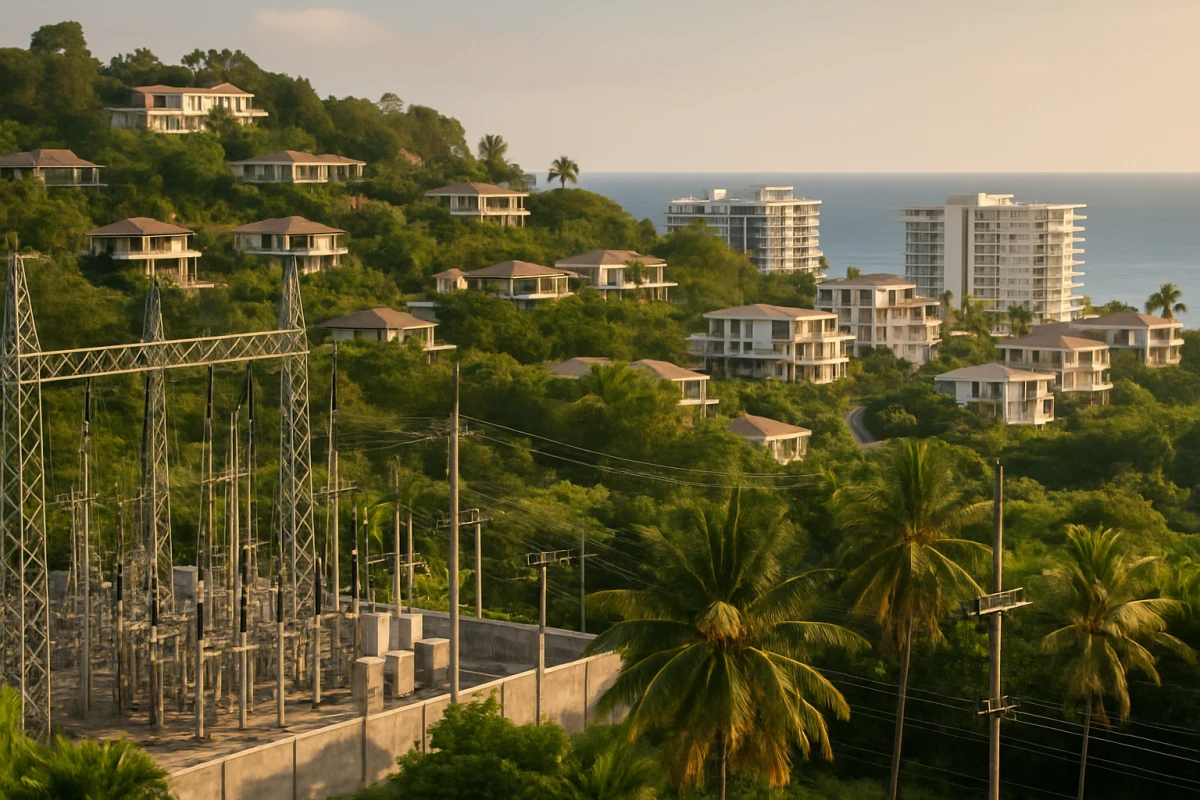
Phuket expands the power grid: five new substations and why it matters
Phuket has announced one of the most practical market developments of the year: a power grid expansion with five new substations and more than THB 1 billion in investment. For buyers, this is not just a utility story. For developers, rental operators, and villa owners, it is about comfort, reliability, operating costs, and long-term asset quality.
What happened
The provincial electricity authority has confirmed a plan to expand network capacity in preparation for stronger demand over the coming years. A new facility in Kathu has already opened, while additional substations are being advanced as part of a broader program. This shows that officials see Phuket’s electricity demand as structural, not temporary.
For real estate, that is an important signal. Such projects are usually launched not for today’s load alone, but to support new residential districts, hotels, service businesses, and large developments now entering the market or still under construction.
Why buyers should care
On Phuket, electricity is tied not only to comfort but also to investment performance. Villas with pools, full air conditioning, lifts, security systems, EV charging, and short-term rental operations create a level of demand that weak infrastructure can feel immediately.
For a private buyer, this means a lower risk of outages or unstable supply in areas where the network is being upgraded. For an investor, it means more reliable operations, fewer guest complaints, and a lower chance that future tenants will avoid a location because of infrastructure limits.
Which areas benefit first
The first beneficiaries are the zones where construction is already intense and where the density of new projects is higher than average. That includes districts continuing to expand with residential complexes, resort properties, hotels, and mixed-use developments.
But it is better to look at three factors together:
- existing utility infrastructure;
- road access and transport links;
- the pace of new residential and commercial development nearby.
If an area is growing quickly but its utilities lag behind, that often creates a hidden risk for future price growth and rental quality.
What to check before buying
Buyers should ask developers and agents simple but specific questions: is the project connected to the existing grid or dependent on future capacity, is there backup power, how are common areas powered, are generators included, and how stable is the system during peak season?
This matters even more in projects with dense apartment layouts, large shared facilities, pools, lift systems, EV charging, and hotel-style management. The more complex the property, the more expensive an infrastructure mistake becomes.
How this may affect prices and rentals
Infrastructure moves like this rarely trigger an immediate price jump. But they strengthen confidence in a district and gradually support the value of land, development plots, and quality completed properties. For developers, it also creates a firmer base for new launches: projects are easier to sell when the area has a clear plan for core infrastructure.
The rental market is affected indirectly but meaningfully as well. Guests and long-stay residents care not only about design and sea views, but also about how consistently a property works in daily life. In that sense, the power grid becomes part of the product, just like finishes or management services.
What investors should do now
- Check not only the location, but also the quality of utilities in the specific project.
- Compare new launches with established neighborhoods where the grid has already proven stable.
- Assess whether projected returns depend too heavily on an optimistic infrastructure scenario.
- If buying for rent, ask how the property performs during the high season and peak load periods.
The bottom line is simple: the power-grid expansion is not a headline-grabber, but it is a serious signal about where the island is heading. Phuket is still growing, and the government is now effectively confirming that growth will be supported by new infrastructure. For real estate, that is a positive sign — but buyers should still choose on the basis of real utility quality, not promises.